Steel fencing manufacturers specialize in the production of high-strength security barriers and reinforcement structures, utilizing advanced welding and coating technologies to ensure long-term durability. These manufacturers provide essential infrastructure components that range from light commercial boundary markers to heavy-duty industrial security perimeters and concrete reinforcement mesh.
Selecting the right manufacturer is critical for procurement teams because the structural integrity of a site depends on the quality of the steel, the precision of the welding, and the effectiveness of the anti-corrosion treatments. Inconsistent material grades or poor welding points can lead to premature failure, increasing maintenance costs and compromising safety standards in high-risk environments.
This guide provides a technical analysis of steel fencing production, explores the selection criteria for different applications such as airport or military security, and examines how professional manufacturing standards impact the total cost of ownership. Readers will learn how to distinguish between various mesh types and identify the optimal fencing solution for their specific site requirements.

1Understanding Steel Fencing Manufacturing Processes

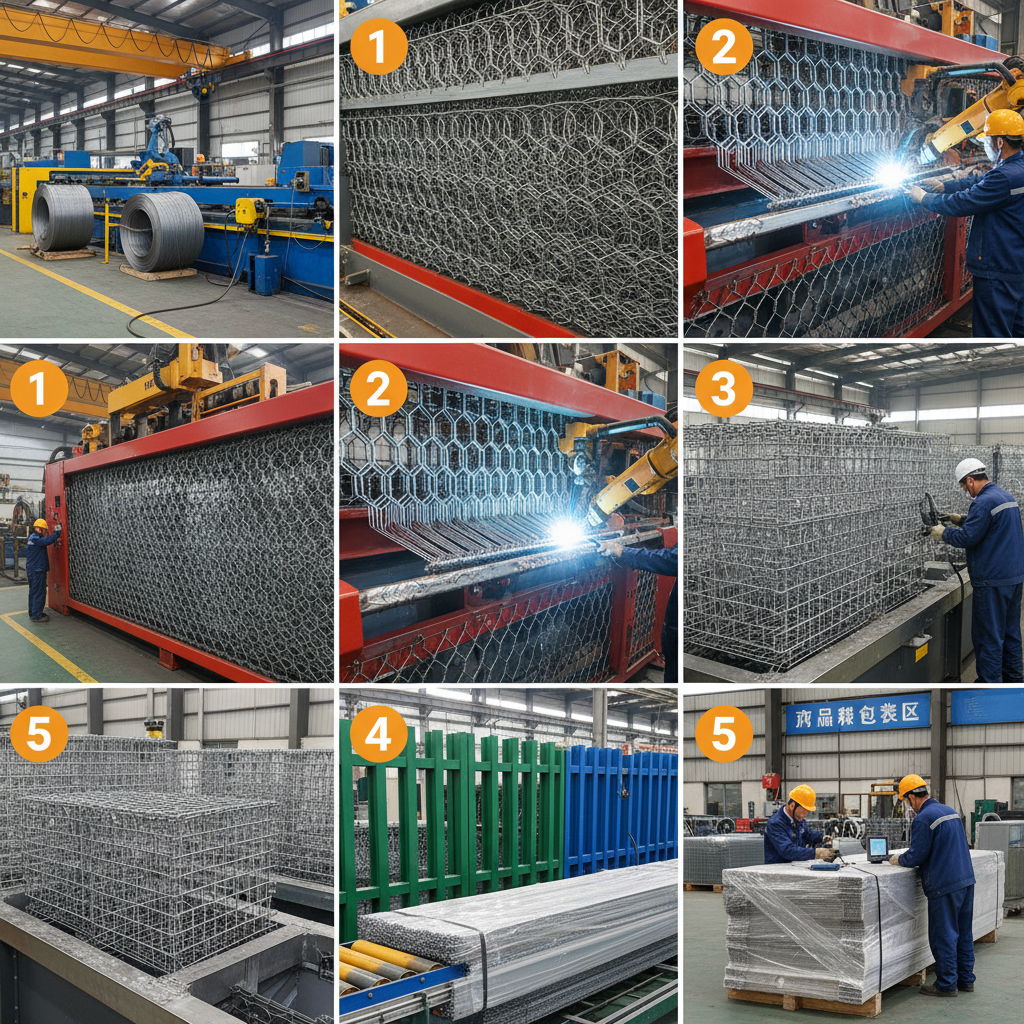
The manufacturing of steel fencing begins with the selection of raw wire, which can be hot-rolled, cold-rolled, or cold-drawn depending on the required tensile strength. The core process involves arranging longitudinal and transverse bars at precise right angles and welding every intersection. High-end manufacturers utilize laser automatic welding machines to ensure consistency and strength at each joint, which is vital for panels that must withstand heavy loads or attempted breaches.
Beyond welding, the process includes straightening and cutting to specific dimensions to ensure that panels fit seamlessly during installation. For reinforcement products, such as Steel Rebar Welded Wire Mesh Panels, the focus is on stability and the ability to distribute stress across a concrete slab, preventing cracks and structural failure in foundations.
Quality control is integrated throughout the production line, from the testing of raw material purity to the inspection of weld penetration. Adherence to international standards like ISO9001 and CE ensures that the resulting fencing is not only strong but also compliant with global safety and engineering codes.
2Core Technical Specifications and Material Grades
The performance of steel fencing is primarily dictated by the gauge of the wire and the grade of the steel used. For instance, high-tensile steel is preferred for security fences to prevent cutting, while ribbed rebar is essential for concrete reinforcement to ensure a mechanical bond between the steel and the cement matrix. The precision of the grid interval determines the "aperture" size, which affects both the security level and the wind resistance of the installation.
Surface treatment is another critical technical specification. Hot-dip galvanizing creates a thick zinc layer that protects the steel from oxidation in humid or saline environments. In contrast, powder coating offers a customizable aesthetic and an additional layer of protection against chemical corrosion, making it suitable for urban architectural fencing.
Manufacturers also offer variations in weld types, such as resistance welding, which creates a fusion bond without the need for filler material. This results in a cleaner finish and a stronger joint that does not weaken the base metal, ensuring that the fence maintains its structural integrity under lateral pressure.
3Critical Application Scenarios for Industrial Steel Mesh
Steel fencing is deployed across a vast array of environments, each with unique demands. For airport and military installations, 358 "anti-climb" mesh is the gold standard because the extremely tight apertures make it nearly impossible to get a finger-hold or use cutting tools effectively. In these scenarios, the fence acts as a primary deterrent and a delay mechanism for unauthorized entry.
In civil engineering, welded wire mesh is indispensable for reinforcing concrete slabs, walls, and foundations. By integrating steel rebar mesh, engineers can significantly increase the construction speed and the overall load-bearing capacity of the structure, reducing the risk of settlement cracks over time.
Agricultural and livestock applications utilize different styles, such as horse fences or farm fences, which prioritize a balance between containment and safety. These products are often designed with specific heights and spacing to prevent animal injury while ensuring that the perimeter remains secure against external predators.
4Comparative Performance Analysis of Welded Mesh
Evaluating the performance of steel fencing requires a look at how different manufacturing methods impact real-world utility. Welded mesh provides far superior stability compared to woven mesh because the intersections are fused, preventing the "shifting" of wires that can occur in woven products when under tension or impact.
When comparing standard welded mesh to high-security variants like the 3D Metal Fence, the primary differences lie in the rigidity and the installation efficiency. 3D panels feature bent edges that provide structural stiffness, allowing for larger spans between posts without sacrificing the strength of the barrier.
steel fencing manufacturers Performance Metrics
The data suggests that procurement from specialized manufacturers results in higher durability and faster installation speeds. This is largely due to the use of automated precision machinery and strict adherence to material certifications, which eliminate the variance found in lower-quality, manually produced fencing.
5Procurement Framework for High-Security Fencing
For procurement teams, the decision process should move beyond price per linear meter. A comprehensive framework involves evaluating the total life-cycle cost, which includes the initial purchase, installation labor, and long-term maintenance. High-quality galvanized steel may have a higher upfront cost but significantly reduces the frequency of rust-related replacements.
Compatibility is another key factor. Ensuring that the panels, posts, and fasteners are designed to work together is essential to avoid structural weak points. Procurement specifications should clearly define the wire diameter, aperture size, and the specific coating weight (grams per square meter) to ensure consistency across large orders.
Finally, evaluating the manufacturer's capability for OEM and ODM orders allows companies to customize fencing for specific security threats, such as adding razor wire toppers or integrating electronic sensors into the mesh structure for real-time intrusion detection.
6Innovations in Anti-Corrosion and Coating Technology
The biggest challenge for steel fencing is corrosion, particularly in coastal or industrial zones. Modern innovations include the use of Zinc-Aluminium alloys, which provide superior protection compared to pure zinc. These alloys create a sacrificial layer that heals itself when scratched, extending the life of the fence in harsh environments by several decades.
Powder coating has also evolved, with the introduction of UV-resistant polymers that prevent the colors from fading under intense sunlight. This is particularly important for privacy fences and architectural barriers where the visual impact is as important as the security function.
Furthermore, the integration of automated laser welding has allowed manufacturers to produce thinner but stronger wires, reducing the overall weight of the panels for easier transport while maintaining the same level of impact resistance through better molecular bonding at the weld points.
7Selection Matrix: Comparing Steel Fencing Types
Choosing the right type of steel fencing depends on the balance between security, cost, and aesthetics. While a chain-link fence is cost-effective for large perimeters, it offers low security and low rigidity. In contrast, a palisade fence provides a high psychological and physical deterrent but is more expensive and slower to install.
For concrete reinforcement, the choice between cold-rolled and hot-rolled ribbed mesh depends on the required precision. Cold-rolled options generally offer tighter tolerances, which is critical for pre-cast concrete elements where every millimeter counts for structural alignment.
| Fence Type | Security Level | Primary Use Case | Durability |
|---|---|---|---|
| 358 Anti-Climb | Extreme | Prisons / Airports | Very High |
| Chain Link | Low-Medium | Sports Fields / Farms | Medium |
| Palisade Fence | High | Industrial Sites | High |
| 3D Metal Panel | Medium-High | Commercial Areas | High |
| Gabion Mesh | Medium | Erosion Control | Extreme |
| Welded Rebar Mesh | N/A (Internal) | Concrete Slabs | Extreme |
Ultimately, the most efficient procurement strategy involves mapping the risk profile of the site to the specific strengths of the mesh type. By utilizing specialized manufacturers who understand these nuances, companies can avoid over-specifying (and over-paying) or under-specifying (and risking security breaches).
Frequently Asked Questions
Conclusion
The selection of steel fencing is a critical decision that balances security requirements, environmental challenges, and budget constraints. By focusing on technical specifications such as material grade, welding precision, and anti-corrosion treatments, procurement teams can ensure a long-term solution that minimizes maintenance and maximizes site safety.
Professional manufacturing standards, as seen with established industry providers, offer the reliability needed for infrastructure that must last for decades. For those evaluating the best options for their specific project, detailed technical information and product catalogues can be reviewed at www.bjfencepanel.com.