Professional Iron Fence Manufacturer for Secure Perimeter Solutions
Selecting a perimeter security solution requires a balance between structural integrity, corrosion resistance, and installation efficiency. For many industrial and residential projects, chain link fencing stands out as the most versatile option due to its open visibility and robust physical barrier capabilities. Whether you are securing a high-traffic commercial warehouse or delineating a residential garden, the choice of wire material and coating directly impacts the long-term maintenance costs and overall lifespan of the installation.
Bangjun specializes in providing high-grade woven mesh solutions tailored to diverse environments. By utilizing galvanized or plastic-coated wire, our products are engineered to withstand harsh weather conditions while maintaining structural tension. Understanding the technical nuances of wire gauge, mesh size, and coating thickness is essential for procurement managers to ensure the fence meets specific security ratings and local building codes.

Technical Composition and Structural Mechanics of Chain Link Fencing
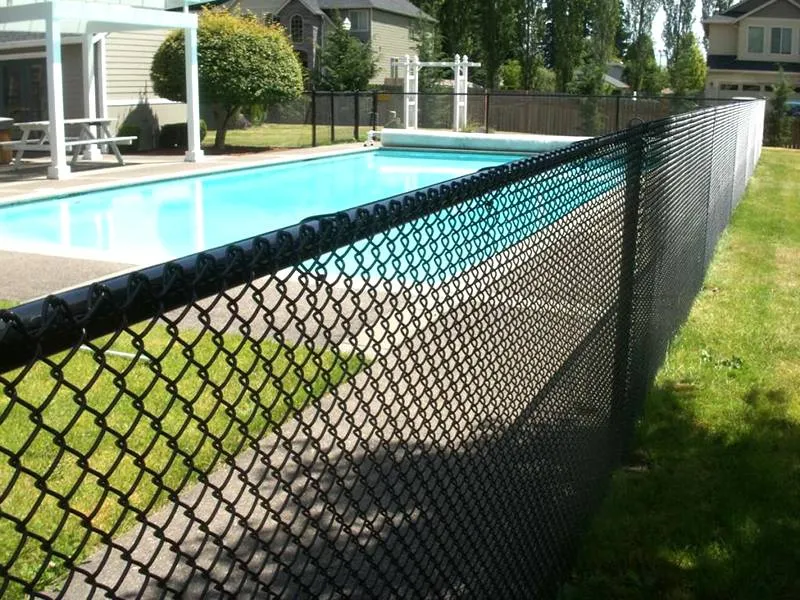
Chain link fencing is fundamentally a type of woven mesh constructed from galvanized or coated steel wire. The manufacturing process involves bending the wire into a zig-zag pattern, allowing each vertical wire to hook securely into the one beside it. This interlocking mechanism creates the characteristic diamond pattern that provides both flexibility and strength, ensuring the fence can absorb impact without permanent deformation.
The durability of the system is heavily dependent on the wire gauge and the coating process. Galvanized wire provides a primary layer of zinc protection against oxidation, while plastic-coated options offer an additional polymer barrier. This dual-layer approach is critical for installations in coastal regions or industrial zones where chemical exposure and humidity accelerate rust. From a technical perspective, the tension of the weave determines the fence's resistance to sagging and unauthorized penetration.
- Galvanized Finish: High-zinc coating for superior atmospheric corrosion resistance.
- PVC/Plastic Coating: Enhanced aesthetic appeal and added protection against salt spray.
- Diamond Mesh Geometry: Optimizes the strength-to-weight ratio for efficient deployment.

Diverse Application Scenarios for Professional Perimeter Control
The versatility of woven wire mesh allows it to be deployed across a wide spectrum of sectors. In residential settings, it provides a secure boundary for backyards and swimming pools without obstructing the view. For commercial properties, such as warehouses and storage facilities, the focus shifts toward deterrence and delineation, where the fence acts as a clear physical marker of property limits.
Industrial sites and construction zones require a more rigorous approach. Here, the fence must protect expensive machinery and prevent unauthorized access to hazardous areas. In these environments, heavy-duty gauges are typically specified. Additionally, sports facilities—including tennis courts and playgrounds—rely on this material to keep spectators safe and ensure that equipment remains within the field of play.
Agricultural applications represent another core use case. Livestock enclosures and crop protection gardens utilize these fences to keep wildlife out while allowing airflow and light to reach the vegetation. Even high-security areas, such as airport perimeters, employ specialized versions of these mesh systems to create secure, transparent boundaries that are easy to monitor via surveillance.
Procurement Criteria for Selecting the Right Fencing Specification
When evaluating a potential iron fence manufacturer, procurement officers should focus on the correlation between the mesh size and the intended security level. A smaller mesh opening (e.g., 50mm) offers higher security by preventing small objects or animals from passing through, whereas a larger opening may be sufficient for simple boundary marking.
Wire gauge is the second most critical factor. A lower BWG number indicates a thicker wire, which translates to higher impact resistance. For industrial applications, BWG 8 or 9 is often preferred, while residential projects may opt for BWG 11 or 12 to balance cost and performance. Buyers must also consider the length of the rolls and the width of the fabric to minimize waste during installation.
Finally, certification is a non-negotiable requirement for large-scale infrastructure projects. Adherence to ISO9001 and CE standards ensures that the manufacturing process is consistent and that the raw materials meet international quality benchmarks. Customization options, including OEM and ODM services, allow projects to meet specific architectural requirements or strict security protocols.
Technical Specification and Material Comparison Table
| Mesh Size | Wire Gauge (BWG) | Standard Width | Recommended Application |
|---|---|---|---|
| 50mm (2") | BWG 8 - 10 | 0.5m - 3m | Industrial Security / Airports |
| 50mm (2") | BWG 11 - 13 | 0.5m - 3m | Residential / Garden Fencing |
| 60mm (2.5") | BWG 8 - 12 | 0.5m - 3m | Commercial / Warehouse |
| 60x60mm (PVC) | Application-specific | 0.5m - 3m | Sports Courts / Swimming Pools |
| 50x50mm (PVC) | Application-specific | 0.5m - 3m | Public Parks / Animal Enclosures |
Manufacturing Quality Control and Process Standardization
The reliability of a fence is determined long before it reaches the site. Quality control begins with the selection of raw materials. High-purity steel is required to ensure that the galvanization process adheres uniformly to the wire surface. Any impurity in the base metal can lead to "white rust" or premature peeling of the plastic coating, which compromises the structural integrity of the weave.
Modern production utilizes advanced equipment such as laser automatic welding machines and heavy-duty hot melt resistance welding machines. These technologies ensure that the tension across the roll is consistent, preventing the "warping" effect that can occur with manual weaving. Strict internal process control is implemented at every stage, from the initial drawing of the wire to the final roll packaging.
Compliance with international standards is a hallmark of professional production. By integrating scientific quality management, manufacturers can guarantee that the wire diameter and mesh aperture remain within tight tolerances. This consistency is vital for contractors who need to ensure that prefabricated posts and rails align perfectly with the mesh fabric during installation.
Future Trends in Perimeter Security and Material Evolution
The industry is shifting toward "smart" and "hybrid" fencing solutions. We are seeing an increase in the demand for composite coatings that offer not only rust resistance but also UV stabilization to prevent the fading of plastic-coated fences in high-exposure environments. The integration of sensor-ready mesh is also becoming more common in high-security sectors, where the fence acts as a detection system.
Sustainability is another driving force. There is a growing preference for lead-free coatings and recycled steel sources without sacrificing the tensile strength of the product. As urban areas expand, the need for low-maintenance, long-life fencing increases, driving the adoption of higher-zinc alloy coatings that extend the service life of the fence by several years compared to standard galvanization.
For the modern buyer, the focus is moving from the lowest initial cost to the lowest Total Cost of Ownership (TCO). This means investing in higher-grade materials and professional manufacturing to reduce the frequency of repairs and replacement cycles, ultimately leading to a more sustainable and cost-effective security infrastructure.
Frequently Asked Questions Regarding Chain Link Mesh
What is the difference between galvanized and plastic-coated chain link fences?
Galvanized fences are coated with zinc to prevent rust, making them ideal for general outdoor use. Plastic-coated fences have an additional PVC or polymer layer over the galvanization, providing extra corrosion protection and a variety of colors for aesthetic integration into landscapes.
How do I choose the correct wire gauge for my project?
Choose a lower gauge number (thicker wire, e.g., BWG 8-10) for industrial or high-security areas where impact resistance is required. For residential or light boundary marking, a higher gauge (thinner wire, e.g., BWG 11-13) is typically sufficient and more cost-effective.
Can these fences be customized for specific heights and lengths?
Yes, most professional manufacturers offer custom sizes. Common widths range from 0.5m to 3m, and roll lengths typically vary from 5m to 25m depending on the specific requirements of the installation site.
Which mesh size is best for preventing animal intrusion?
For smaller animals, a mesh size of 50mm (2 inches) or smaller is recommended. The tighter the weave, the more effective the barrier is against small pests or pets, though this may increase the overall material cost.
What certifications should I look for in a fencing supplier?
Look for ISO9001 certification for quality management and CE certification for safety and environmental standards. These ensure that the product has undergone rigorous testing and is manufactured according to international industry benchmarks.
How is the product typically packaged for international shipping?
The mesh is typically supplied in rolls to facilitate easy transport and handling. Special packing, such as palletizing or reinforced wrapping, can be arranged upon request to ensure the rolls arrive without deformation.
Technical References and Industry Standards
- ASTM International - Material Standards for Steel Fencing
- ISO Quality Management Systems (ISO 9001)
- EU CE Marking Guidelines for Construction Products
- International Zinc Association - Galvanization Technical Data
Finding a reliable partner for perimeter security involves evaluating technical capacity and quality consistency. For projects requiring durable, standard-compliant chain link solutions, we provide a comprehensive range of galvanized and coated options tailored to your specific security needs.
Related Technical Insights